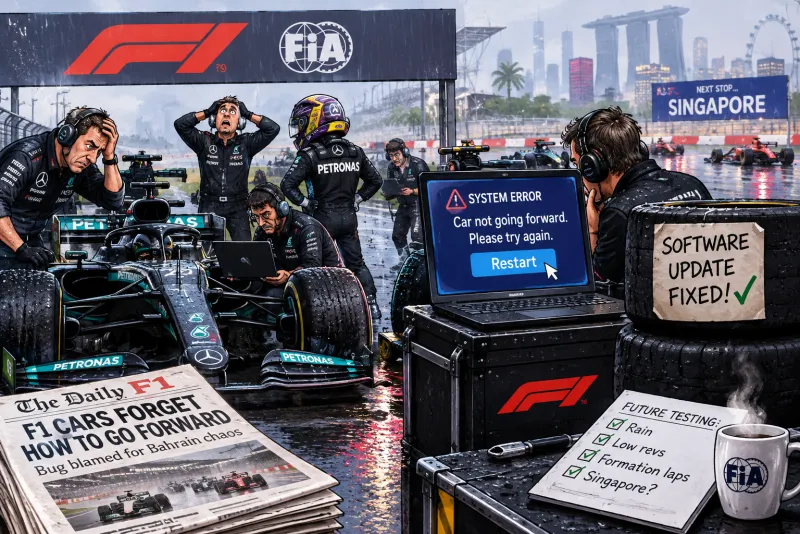
The problem, which brought several cars to a halt at Sepang, was caused by the wonderfully simple interaction between wet weather, low engine revs and a 250kW power reduction system.
In other words, Formula 1 built a machine capable of producing enormous amounts of computing power, then discovered that asking it to function while it was raining was apparently a bridge too far.
Drivers were forced to switch their cars off and restart them, an exercise normally associated with elderly Windows PCs and office printers rather than billion-dollar racing technology.
The FIA has now assured everyone that the problem has been resolved ahead of this weekend’s Singapore Grand Prix. This will come as a considerable relief to fans, particularly those who had feared that Singapore might become a repeat of Malaysia, with 22 cars sitting motionless on the grid while engineers furiously rebooted them.
Advertisement
The sport’s new 2026 regulations, which place much greater emphasis on electric power, have already attracted criticism from drivers who apparently expected Formula 1 cars to remain capable of moving forwards.
Lewis Hamilton was among those caught out by the failure in Malaysia, while Max Verstappen managed to win the race despite the general impression that nobody, including the machinery, knew quite what was happening.
The FIA has promised additional software updates and further testing. There is also a contingency plan.
It may involve turning the cars off and on again.